
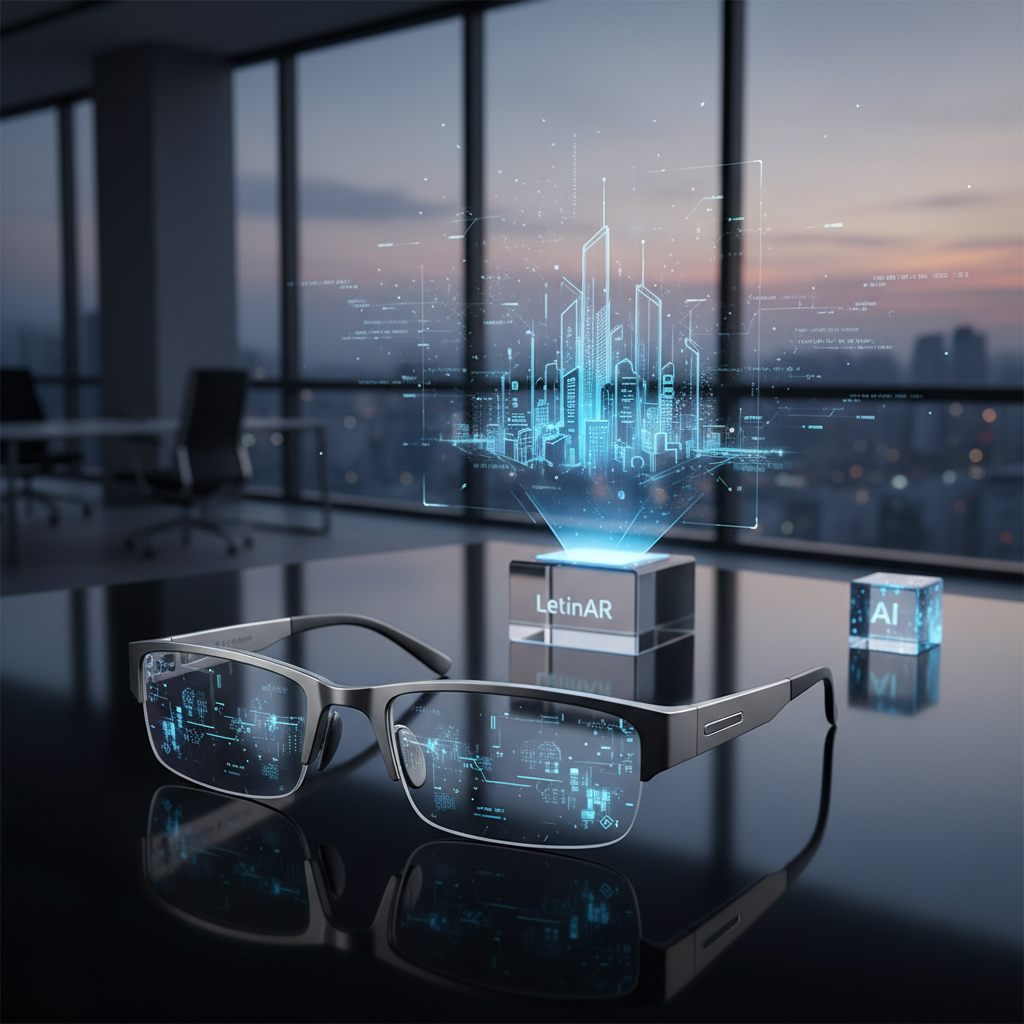
How South Korea’s LetinAR Optics Could Finally Make AI Glasses Practical for Small Businesses
AI glasses keep promising hands-free productivity, but most models stumble on bulky optics, dim displays, or awkward form factors. A South Korean innovator, LetinAR, is advancing a different approach to near‑eye displays that could change that calculus. By using a pinhole micro‑reflector array rather than traditional birdbath or waveguide assemblies, LetinAR’s optics aim to deliver brighter visuals, wider eye-boxes, and thinner, more eyeglass‑like frames. For small businesses—where every second matters on the shop floor, in the warehouse, or at a client site—this shift could turn AI glasses from a novelty into a dependable tool for training, task guidance, and customer service.
- What makes LetinAR’s optics different
- Why this matters for small businesses now
- High‑impact use cases and simple ROI math
- Build vs. buy: platform and integration choices
- Optics comparison: LetinAR vs. alternatives
- A practical 90‑day pilot blueprint
- Risks, limitations, and what to watch
- Conclusion
What makes LetinAR’s optics different
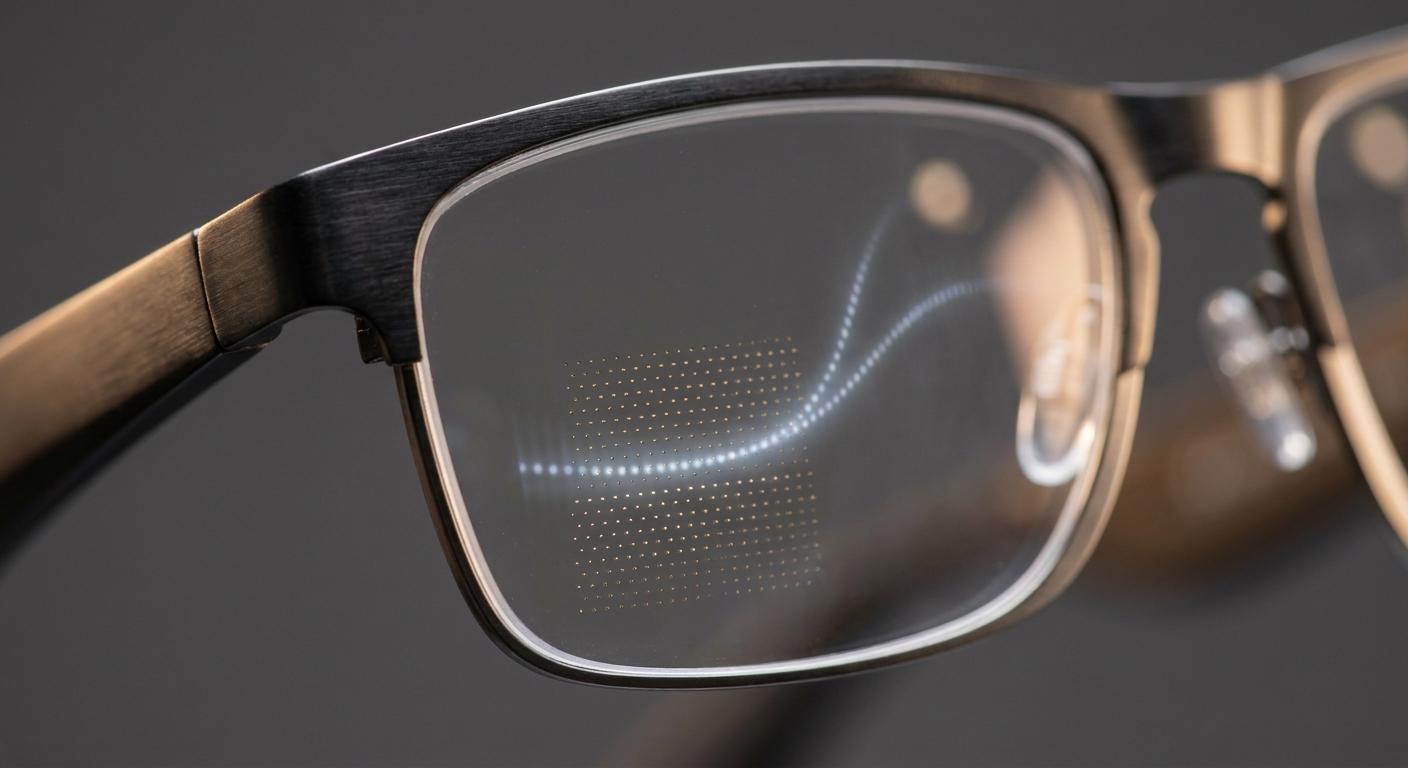
Most augmented‑reality and AI glasses rely on either a “birdbath” combiner or a waveguide to route light from a tiny display to your eye. These systems can be bulky, reduce brightness, or create color and focus compromises—especially in compact frames. LetinAR’s approach, often described as a pinhole micro‑reflector array, places microscopic apertures along part of the lens. A micro‑display’s light is guided through these pinholes, reflecting into the eye at just the right angles. The result: a simpler, thinner optical stack that supports a larger eye box (the region where you can still see the image clearly), improved brightness, and a more conventional eyewear silhouette.
For small businesses, the practical benefit is not “wow-factor holograms,” but legible overlays: arrows pointing to the correct bin, checkmarks confirming a step is complete, or icons showing live equipment status—visible without craning your neck toward a handheld screen.
Why this matters for small businesses now
Three trends are converging: on‑device AI that runs privately at the edge, maturing voice interfaces that actually understand work contexts, and lighter optics that fit into eyewear employees will wear all day. Together, they unlock hands‑busy, eyes‑up workflows where guidance follows the worker, not the other way around. That translates into faster onboarding for new hires, fewer mistakes in repetitive tasks, and real‑time verification in safety‑critical steps—without requiring employees to juggle phones, tablets, or paper checklists.
Expert insight: The most reliable productivity gains from AI glasses come from subtracting friction—not adding “wow.” If the device quietly removes 10–20 seconds from a step repeated hundreds of times per day, the ROI compounds faster than any single flashy feature.
Because LetinAR’s optics aim for compactness and brightness, they align with everyday business environments: bright retail floors, sunlit warehouse aisles, or tight service bays. In those settings, legibility and comfort—not cinematic AR—win the day.
High‑impact use cases and simple ROI math
Four practical scenarios
- Inventory picking and packing: Workers see aisle/bin arrows, quantity confirmations, and exception prompts (e.g., “short pick”) without pausing to check a handheld.
- Field service and maintenance: Step‑by‑step procedures, torque specs, and sensor trends float in view; hands and attention stay on the equipment.
- Front‑of‑house and client service: Subtle prompts display next‑best actions, appointment notes, and loyalty flags—no phone-glancing mid‑conversation.
- Training and compliance: New hires follow visual cues and safety checks; supervisors review auto‑captured proof‑of‑work trails.
Back‑of‑the‑envelope ROI
Use this quick framework to sanity‑check value before a pilot:
- Baseline the task: Identify a repeatable workflow (e.g., pick one item) and time it across 20 runs.
- Identify “micro‑frictions”: Look for seconds lost to device handling, page scrolling, or back‑tracking.
- Estimate the uplift: Assume AI glasses remove 10–20% of micro‑frictions. Convert to seconds per cycle.
- Scale to volume: Seconds saved × cycles/day × workdays/month = time reclaimed.
- Value the time: Multiply reclaimed hours by fully loaded hourly cost. Add error reduction benefits (waste, returns, rework).
- Compare to TCO: Hardware lease + management + training + software per user. Aim for payback in 6–12 months.

Build vs. buy: platform and integration choices
The optics are only half the story. Small businesses should prioritize a stack that integrates with existing tools and IT controls.
- Device and OS: Favor glasses that support standard mobile management (MDM/EMM), Wi‑Fi 6/6E, and Bluetooth peripherals (scanners, push‑to‑talk).
- AI runtime: On‑device models to protect privacy for transcription, vision, and instructions; cloud fallback for heavy tasks.
- App strategy: Start with a low‑code workflow builder or a prebuilt app for pick/pack, inspections, or SOP guidance. Add APIs later.
- Security: Enforce SSO, device attestation, and role‑based access. For cameras, adopt “privacy zones” and on‑device redaction.
- Change management: Involve frontline leads early. If it isn’t comfortable and clearly helpful by day three, adoption will stall.
Optics comparison: LetinAR vs. alternatives
When selecting AI glasses, judge the optics as a business decision: readability, comfort, and uptime drive value more than theoretical field‑of‑view charts. Here’s a qualitative comparison to orient discussions with vendors.
| Attribute | Birdbath Combiner | Waveguide | Pancake/Freeform | LetinAR‑style Pinhole Micro‑Reflector |
|---|---|---|---|---|
| Frame bulk/weight | Medium–High | Low–Medium | Medium | Low |
| Brightness / outdoor legibility | Medium | Medium | Medium | Medium–High |
| Eye box (ease of seeing image) | Medium | Low–Medium | Medium | Medium–High |
| Optical complexity | Medium | High | Medium–High | Low–Medium |
| Color uniformity / artifacts | Medium | Variable | Medium | Medium–High |
| Prescription friendliness | Medium | Low–Medium | Medium | Medium–High |
| Manufacturing cost outlook | Medium | High | Medium | Medium (fewer exotic parts) |
| Best‑fit SMB use cases | Training, guided procedures | Design/visualization; niche | Mixed workloads | Everyday task guidance, logistics, field service |
Takeaway: LetinAR’s approach prioritizes practicality over spectacle—often the right trade‑off for small business environments where simple, legible overlays beat immersive 3D every time.
A practical 90‑day pilot blueprint
Use this stepwise plan to de‑risk adoption and prove value quickly.
Phase 1: Define and design (Days 1–30)
- Pick one workflow: High volume, repeatable, measurable (e.g., pick/pack for top 200 SKUs).
- User stories: “As a picker, I want bin location and quantity hands‑free so I don’t stop moving.”
- Success metrics: Cycle time, errors, training hours, first‑day proficiency, worker satisfaction.
- Privacy & safety: Establish camera policies, opt‑in, signage, and PPE compatibility.
- Integration: Connect to WMS/CMMS via API or CSV; keep v1 overlays simple (arrows, checkmarks).
Phase 2: Pilot and iterate (Days 31–60)
- Deploy to a champion team: 5–10 users on one shift; track every exception and friction point.
- Optimize overlays: Increase contrast, reduce visual clutter, tune voice commands, add haptic cues if available.
- Reliability sprints: Test Wi‑Fi roaming, battery swaps, charger logistics, and lens cleanability.
- Training loop: 30‑minute onboarding, then day‑3 refresher based on real mistakes.
Phase 3: Prove and expand (Days 61–90)
- Compare baselines: Report cycle time and error deltas versus control group.
- Extend coverage: Add adjacent tasks (put‑away, cycle counts, safety checks).
- Document SOPs: Create a “glasses‑first” playbook with troubleshooting and hygiene steps.
- Executive readout: Payback forecast, scale plan, and procurement options (lease vs. buy).
Risks, limitations, and what to watch
- Battery life vs. brightness: Brighter, more legible overlays consume more power; plan for hot‑swappable batteries or mid‑shift top‑ups.
- Field of view trade‑offs: Narrower overlays can still deliver strong ROI if they’re crisp and context‑aware. Resist chasing cinematic AR.
- Fit and comfort: Even lightweight frames can cause fatigue if nose pads and temples aren’t tuned. Budget time for fittings.
- Glare and outdoor use: Test in direct sun and under LED warehouse lighting. Anti‑reflective coatings and contrast‑aware UIs help.
- Change management: Early adopters thrive when managers model usage and reward reduced errors, not just speed.
- Data governance: Treat captured images and transcripts as sensitive operational data; set retention and access policies up front.
Conclusion
AI glasses don’t need to be flashy to be transformative. South Korea’s LetinAR optics technology points toward a pragmatic future: thinner lenses, brighter overlays, and frames that look and feel like real eyewear. For small businesses, that unlocks the use cases that matter—training that sticks, tasks that flow, and fewer costly mistakes. Start small with a single workflow, prove value in 90 days, and scale thoughtfully. In the process, you’ll convert incremental seconds into durable competitive advantage—and build a foundation for more advanced AI‑assisted operations down the line.
Ready to explore how you can streamline your processes? Reach out to A.I. Solutions today for expert guidance and tailored strategies.