
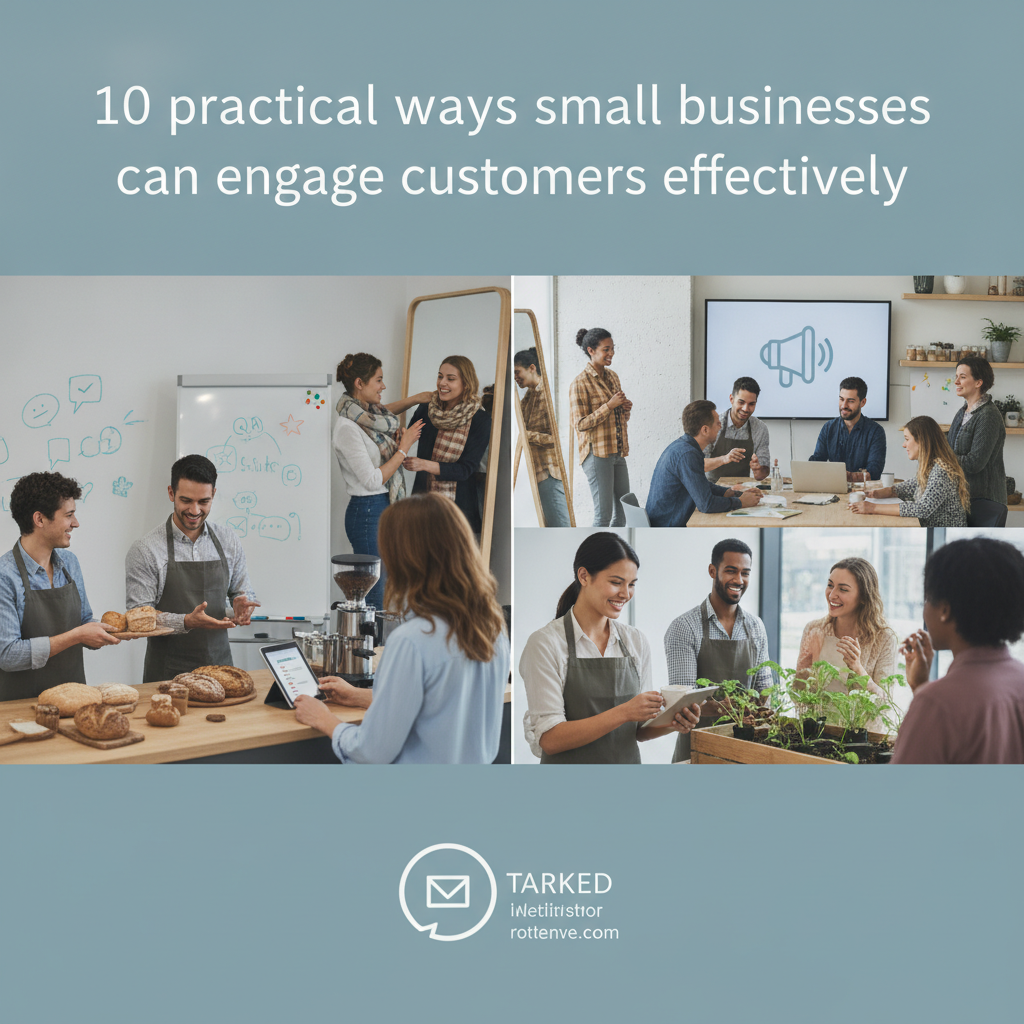
10 Practical Ways Small Businesses Can Engage Customers Effectively
Customer attention is hard-won and easily lost. In a year defined by rapid AI adoption and rising service expectations, small businesses that engage customers effectively will grow faster, spend less on acquisition, and reduce churn. This guide distills ten practical, battle-tested moves you can implement without enterprise budgets or long timelines. Whether you run a professional services firm, a local retailer, or a growing e‑commerce brand, you’ll find clear playbooks, examples, and light‑weight automation ideas to turn everyday interactions into loyal relationships.
- 1) Map your customer journey to find (and fix) friction
- 2) Personalize the first 30 seconds
- 3) Add live chat with AI triage and human handoff
- 4) Use SMS for time‑sensitive updates and reminders
- 5) Trigger one‑question micro‑surveys at natural moments
- 6) Publish a self‑serve knowledge base (plus 60‑second videos)
- 7) Automate proactive check‑ins and re‑engagement nudges
- 8) Launch a simple loyalty or membership program
- 9) Create a lightweight customer advisory panel
- 10) Close the loop publicly: “You said, we did”
- Channel fit: quick comparison table
- 30‑60‑90 day rollout checklist
Customers remember two things: how fast you helped and how personal it felt. Design every touchpoint around speed and relevance.
1) Map your customer journey to find (and fix) friction
Start by visualizing the full path from discovery to repeat purchase and referral. Keep it simple: awareness → consideration → purchase → onboarding → support → renewal/upsell → advocacy. For each stage, list the top one or two customer questions and what you currently provide (page, email, script, video, chatbot). Then mark friction points: slow responses, confusing steps, or dead ends. A solo consultant might discover prospects fall out after the proposal stage; a home services company might see delays at scheduling and follow‑up. Prioritize fixes that reduce time and uncertainty—often the biggest drivers of engagement and trust.

2) Personalize the first 30 seconds
The opening moments of any interaction set the tone. On your website, use intent signals (page viewed, source, location) to personalize the hero message and call‑to‑action. Example: a boutique accounting firm can show “Talk to a tax specialist in under 10 minutes” during peak season with a one‑click scheduling widget. In‑store, coach staff to greet with a context‑rich opener (“Welcome back—are we working on returns today or payroll setup?”). In email, segment by lifecycle: new, active, lapsed. Goal: eliminate generic openings so customers feel seen immediately.
- Website: dynamic hero text and CTA based on referral source.
- Phone: route repeat callers to their last agent.
- In‑app/e‑commerce: surface saved carts or replenishment shortcuts.
3) Add live chat with AI triage and human handoff
Live chat boosts conversion when it reliably answers “now” questions. Pair a narrow, scripted AI triage (shipping ETA, appointment availability, pricing tiers) with clear, fast escalation to a human. Define service levels: AI responds in under 2 seconds; human takeover within 60 seconds during business hours. Train the bot to recognize emotion and complexity (“I’m frustrated,” “custom contract”) and hand off proactively with a short summary to save customers from repeating themselves. Track first contact resolution, average handle time, and satisfaction after chat.

4) Use SMS for time‑sensitive updates and reminders
SMS is ideal for short, transactional messages: appointment confirmations, curbside pickup alerts, service‑window reminders, and “your order is out for delivery.” Always obtain consent, identify your business at the top, and offer a clear opt‑out. Keep messages under 160 characters and include a single action: confirm, reschedule, track, or pay. A dental office can cut no‑shows with a two‑tap reschedule link; a mobile repair service can share tech ETA and a selfie link for easy identification on arrival. Measure response time and completion rate of the desired action.
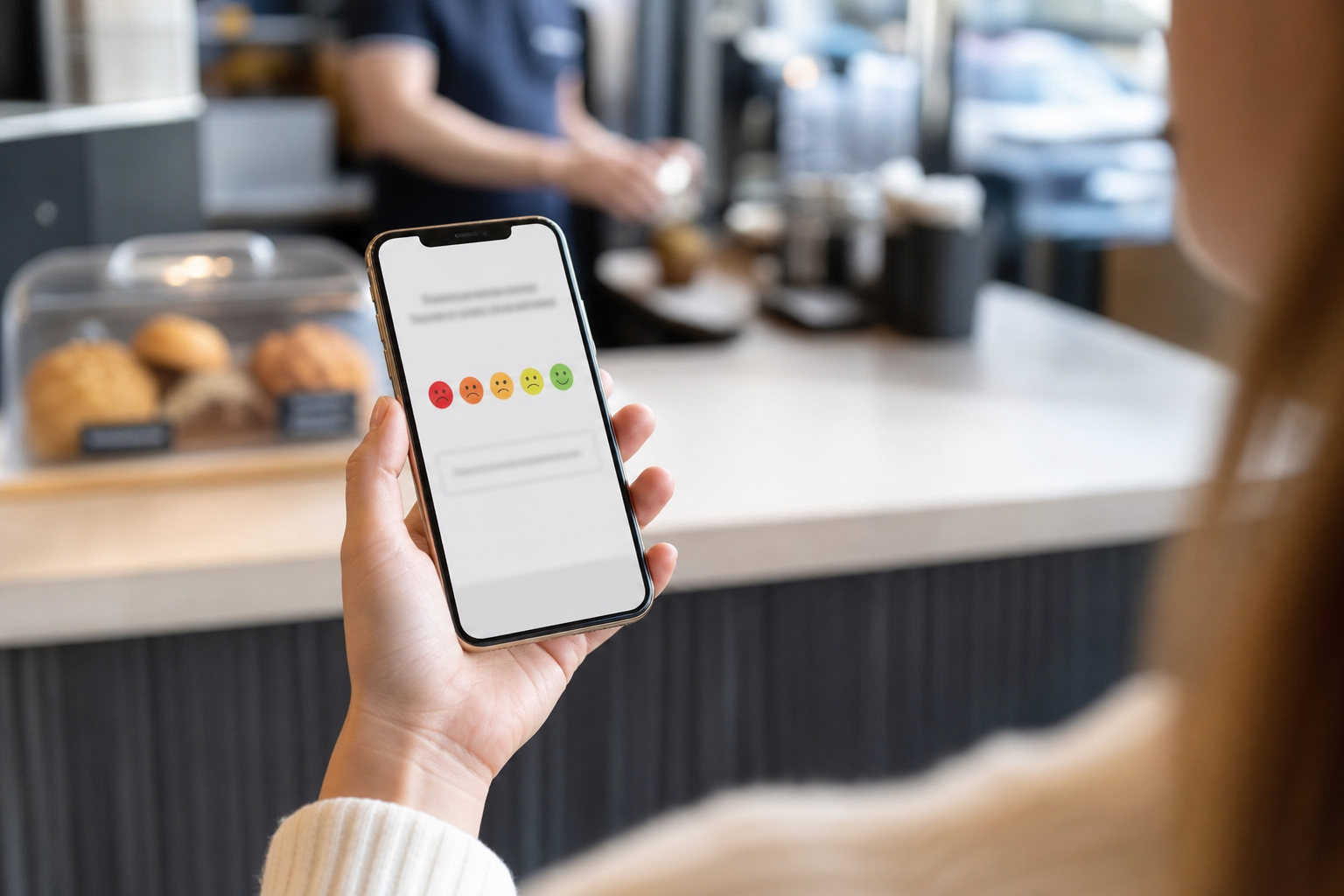
5) Trigger one‑question micro‑surveys at natural moments
Replace long feedback forms with a single, targeted question delivered right after key events—post‑delivery, after onboarding, or following a support interaction. Examples: “How easy was it to schedule?” (1–5), “Did this article answer your question?” (Yes/No), “Would you recommend us?” (0–10). Automate the follow‑up based on score: thank and invite reviews for promoters; offer a fast fix pathway for detractors. Close the loop with a personal note within 24 hours when feedback is negative—speed here is your superpower.
6) Publish a self‑serve knowledge base (plus 60‑second videos)
Customers prefer self‑service for simple tasks. Build a searchable knowledge base with concise articles and 60‑second vertical videos for common how‑tos. Use clear, scannable formatting: problem statement, quick answer, steps, and a “still stuck?” escalation button. For professional services, publish mini explainers (e.g., “What to bring to your first immigration consultation”). For e‑commerce, show returns, sizing, care guides, and warranty claims. Add schema markup so answers can appear in search results and reduce inbound volume while increasing satisfaction.
7) Automate proactive check‑ins and re‑engagement nudges
Don’t wait for customers to ask for help—anticipate needs. Create time‑based workflows: 7‑day onboarding check‑in, 30‑day usage review, 90‑day tune‑up invite, and renewal reminders. A managed IT provider can schedule quarterly “health checks” with a simple dashboard screenshot and three recommended actions. A salon can send seasonal style guides and early‑bird booking windows. Keep messages educational and specific; the nudge should feel like a helpful heads‑up, not a sales blast. Measure re‑booking rate and revenue per active customer.
8) Launch a simple loyalty or membership program
Engagement increases when customers see compounding value. Start with a simple structure you can honor consistently: points per purchase, member‑only service windows, priority support, or bundled perks (e.g., free annual check‑up for service subscribers). Avoid over‑complex tiers; clarity beats cleverness. If you’re a local retailer, tie perks to community moments (back‑to‑school, hometown games). If you’re a B2B services firm, offer office‑hours or a quarterly strategy call for members. Publicize the program in checkout flows and post‑purchase emails.
9) Create a lightweight customer advisory panel
Invite 8–12 customers who represent key segments to a short, recurring session (virtual or in‑person) every quarter. Share your roadmap, test messaging, and ask about their changing priorities. Compensate with perks or credits. Treat it like a two‑way partnership: send an agenda, keep it to 60 minutes, and follow with a summary and decisions. This group becomes a source of high‑signal feedback and credible testimonials, and they’ll often refer peers because they feel invested in your success.

10) Close the loop publicly: “You said, we did”
Trust grows when customers see their input implemented. Publish a short, ongoing changelog on your site or social channels highlighting improvements tied to real feedback: “You asked for Saturday pickups—now live,” “You wanted status tracking—here’s the new page.” Keep it brief and human. Link to the relevant feature or policy. This habit signals that engagement is not a survey opt‑in but a relationship where the customer’s voice drives action.
Channel fit: quick comparison table
Use this comparison to match the right channel to the job, budget, and timeline. Adjust costs for your market and volume.
| Channel | Primary Job | Approx. Cost | Time to Launch | Best For | Watch Outs |
|---|---|---|---|---|---|
| Live Chat (AI + Human) | Speed to answer, conversion | $$ (tool + staffing) | 1–2 weeks | Pre‑purchase questions | Slow handoffs kill trust; script narrow intents |
| SMS | Time‑sensitive alerts | $ (per‑message) | Days | Appointments, deliveries | Consent and opt‑out required; keep it short |
| Micro‑Surveys | Fast feedback | $ | Days | Post‑support, post‑delivery | Act on negatives within 24 hours |
| Knowledge Base + Videos | Self‑service answers | $ to $$ | 2–4 weeks | How‑tos, policies | Keep content fresh; add escalation path |
| Loyalty/Membership | Retention, share of wallet | $ to $$ | 2–6 weeks | Repeat purchases, services | Too complex = low adoption |
| Advisory Panel | Insight, roadmap validation | $ (perks/credits) | 2–4 weeks | High‑value B2B/B2C segments | Require clear agendas and follow‑ups |
30‑60‑90 day rollout checklist
Use this structured plan to move from ideas to measurable impact without overwhelming your team.
Days 1–30: Foundation and quick wins
- Map your journey with top 2 questions per stage; identify three friction points.
- Personalize homepage CTA and add a one‑click scheduling widget.
- Turn on one transactional SMS: appointment confirmation or delivery alert.
- Publish five knowledge base articles covering your most common support tickets.
Days 31–60: Feedback and responsiveness
- Launch live chat with AI triage for 3–5 intents and a human handoff SLA.
- Implement micro‑surveys post‑support and post‑delivery with auto‑routing for detractors.
- Start a monthly “You said, we did” update on your site or social.
Days 61–90: Retention engines
- Roll out a clear, simple loyalty or membership offer; announce to existing customers first.
- Form your advisory panel; schedule the first 60‑minute session and send an agenda.
- Automate a 30‑day usage check‑in and a 90‑day tune‑up sequence.
How to measure what matters
- Speed: time to first response (chat, phone, email), resolution time, and on‑time arrival (field service).
- Engagement: click‑through on personalized CTAs, chat engagement rate, micro‑survey response rate.
- Satisfaction: CSAT after support, NPS quarterly, review volume and average rating.
- Retention/Revenue: repeat purchase rate, active subscribers/members, revenue per active customer.
Review metrics weekly for the first 90 days, then move to a monthly cadence. Pair the numbers with three qualitative insights from support transcripts or advisory panels to avoid optimizing for the wrong signal.
Real‑world examples to borrow
- Professional services firm: “Schedule now” dynamic CTA during tax or contract peak season, plus a 60‑second video explaining what to prepare for your first meeting.
- Local retailer: SMS “your order is ready” with a curbside pickup lane number and a two‑way “I’m here” reply keyword.
- Home services: Automated 24‑hour and 2‑hour window reminders; technician profile with photo and three safety tips; post‑visit micro‑survey asking “Was the area left cleaner than found?”
- E‑commerce: Live chat offering size guidance and a one‑click exchange label; knowledge base article with a 30‑second care video for best‑selling items.
Final thought
Customer engagement isn’t about more messages—it’s about fewer, smarter moments that remove friction and feel personal. Start with the journey map, add one or two fast channels where responsiveness matters most, and build a simple feedback loop that you actually act on. Over 90 days, these small systems compound into a reputation for being easy to buy from and great to stay with—exactly what fuels sustainable growth for small businesses.
Ready to explore how you can streamline your processes? Reach out to A.I. Solutions today for expert guidance and tailored strategies.