

A 35-person commercial HVAC contractor is preparing a bank financing request, but its owner cannot quickly reconcile job profitability, overdue invoices and monthly cash flow. The numbers sit across QuickBooks, spreadsheets, email and a field-service platform. That is a visibility problem, not merely an accounting problem. Rillet’s rapid rise offers a useful contrast: its investors could act when updated growth data arrived because the company had built a credible operating record before the funding conversation accelerated. For entrepreneurs, the practical lesson is to create a trusted, current view of the business long before a lender, buyer or partner asks for one.
- The 48-hour round was the result, not the lesson
- Why a board update could prompt a rapid decision
- Rillet’s proof points accumulated over time
- AI accounting and the small-firm reality
- Build a monthly operating evidence package
- Frequently asked questions
- Readiness beats speed
The 48-hour round was the result, not the lesson
Rillet’s headline was extraordinary. CEO Nicolas Kopp said the AI accounting startup’s $100 million Series C, at a $1 billion valuation, came together in less than 48 hours, giving the company unicorn status. TechCrunch reported Kopp’s account of the rapid raise. But a small-business owner should resist the tempting interpretation: that speed itself was the achievement.
Fast transactions are usually the visible end of slow credibility. Investors had a reason to interpret Rillet’s growth update quickly. A lender assessing an HVAC contractor, by contrast, cannot responsibly infer job margins from an ageing spreadsheet, a half-finished reconciliation and a folder of emailed invoices. The distinction matters. Capital becomes easier to pursue when outsiders can understand your business without asking you to reconstruct it under pressure.

Why a board update could prompt a rapid decision
Reports on the Rillet deal point to a routine board meeting, where the CEO shared growth metrics that prompted investors to assemble a $100 million round at a valuation above $1 billion. The reported trigger was an operating update, not a formal fundraising campaign. That is the more useful entrepreneurial insight.
A decision-grade update answers predictable questions before someone has to ask them. What is growing? Which work is profitable? What cash is due? What changed since last month? What requires management attention? The owner who can answer those questions from consistent records has options. The owner who needs a week of staff effort to assemble the answers is negotiating from a weaker position.
Consider the 35-person HVAC contractor. Each month, its operations manager could require job managers to confirm completed work, change orders and unbilled items by a fixed date. The bookkeeper could then reconcile invoices and cash receipts, while the owner reviews only jobs with unusual margin movement or overdue balances. Nothing in that example requires a new accounting system. What changes is the cadence: financial evidence becomes a regular management product instead of an emergency project for the bank.
That discipline also protects the firm from mistaking activity for performance. Revenue can look healthy while cash collections, labour overruns or unapproved changes quietly erode the story. A current operating snapshot brings those gaps into view while management can still respond.
Rillet’s proof points accumulated over time
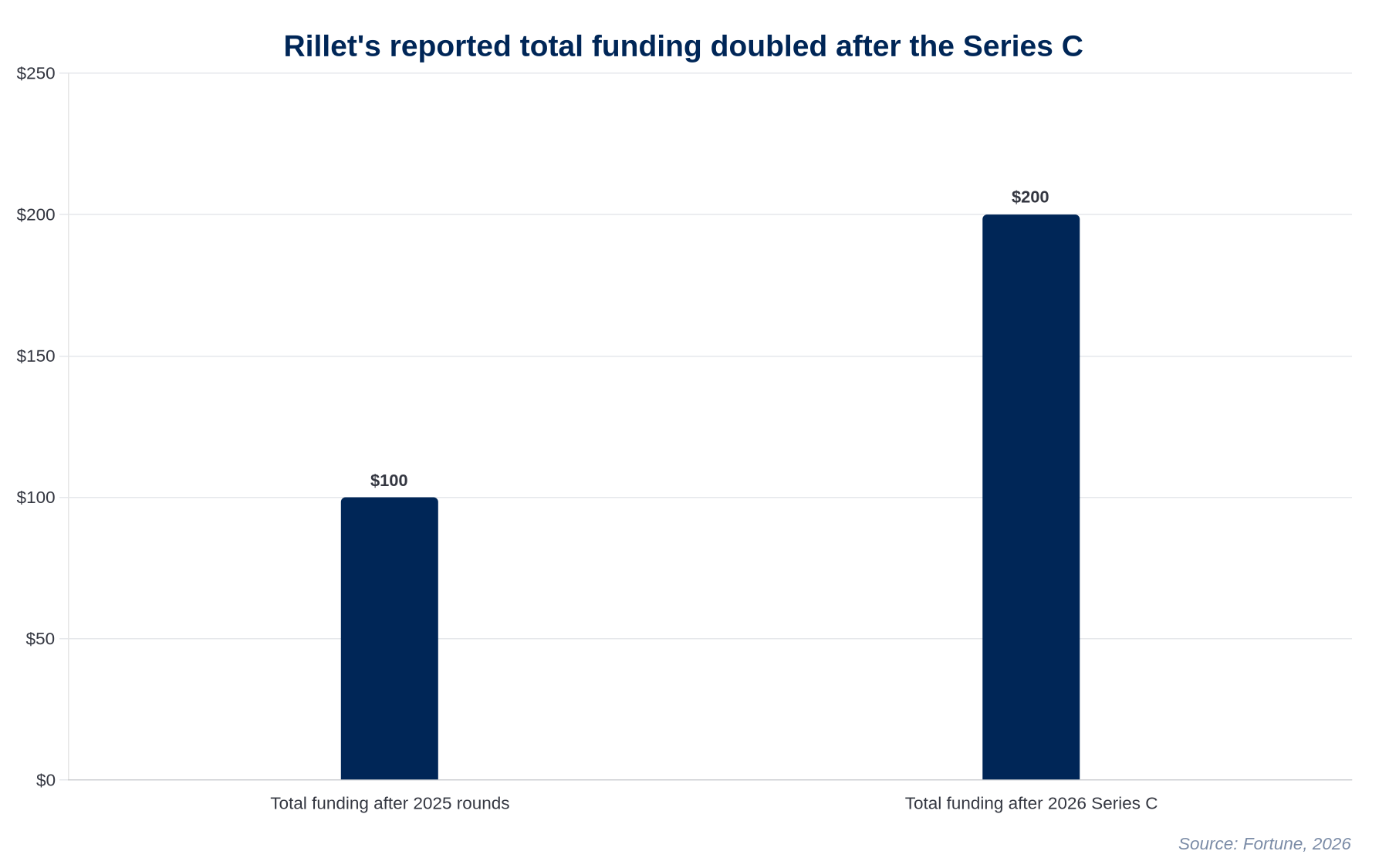
Rillet did not appear from nowhere. Reuters reported that the company raised $70 million in a round co-led by Andreessen Horowitz and ICONIQ after a $25 million round two months earlier, taking total funding at that point above $100 million. That earlier funding sequence was already visible before the Series C. Rillet’s own account described the Series B as following a Sequoia-led Series A by about 10 weeks. Its funding history shows a sequence of escalating proof points.
By the Series C announcement, the round was led by Iconiq and included existing and new investors, while Rillet’s total funding had risen from above $100 million after its earlier rounds to over $200 million. Fortune reported the $100 million round, $1 billion valuation and expanded investor backing. The chart uses the reported rounded funding comparison, not a claim that the company became credible in a single weekend.
The company was founded in San Francisco in 2024 and reached its $1 billion valuation in about two years, according to Yahoo Finance. Its pace was unusually fast, but it still followed a multi-round progression. Small firms should take the right lesson from that progression: update the proof system continuously. Do not wait for a financing request, acquisition approach or partner dispute to find out whether your records support the business story.
AI accounting and the small-firm reality
Rillet’s product ambition is large. It describes itself as an AI-native accounting and ERP platform using AI agents to provide real-time, auditable financial data, while positioning itself against legacy enterprise systems. Forbes reported that the company aims to close books in hours rather than weeks. That is the financial reality Rillet says it is building toward.
For a commercial contractor, law practice or design firm, the immediate question is less dramatic: can you make the numbers ready for review sooner, with clearer evidence behind them? Most small firms do not need to replace their general ledger with an AI agent. They need to remove fragile handoffs between the systems and people already involved in billing, project delivery, receipts and approvals.
That means keeping accounting judgment human. A bookkeeper or external accountant should still review reconciliations, unusual coding, disputed invoices and material adjustments. AI assistance can help prepare a first draft of variance commentary or identify missing documents, but it should not silently decide how a transaction belongs in the books. Firms considering AI should start with the same restraint recommended in Your First AI Agent Should Have One Small Job: define a narrow task, check its output and expand only when the control process works.
Build a monthly operating evidence package
The small-business equivalent of an investor-ready update is a monthly evidence package. It is a controlled collection of core reports, source documents, exceptions and management commentary. Its purpose is simple: give the owner a reliable basis for decisions, and give an outside reviewer a clear path from headline number to supporting record.
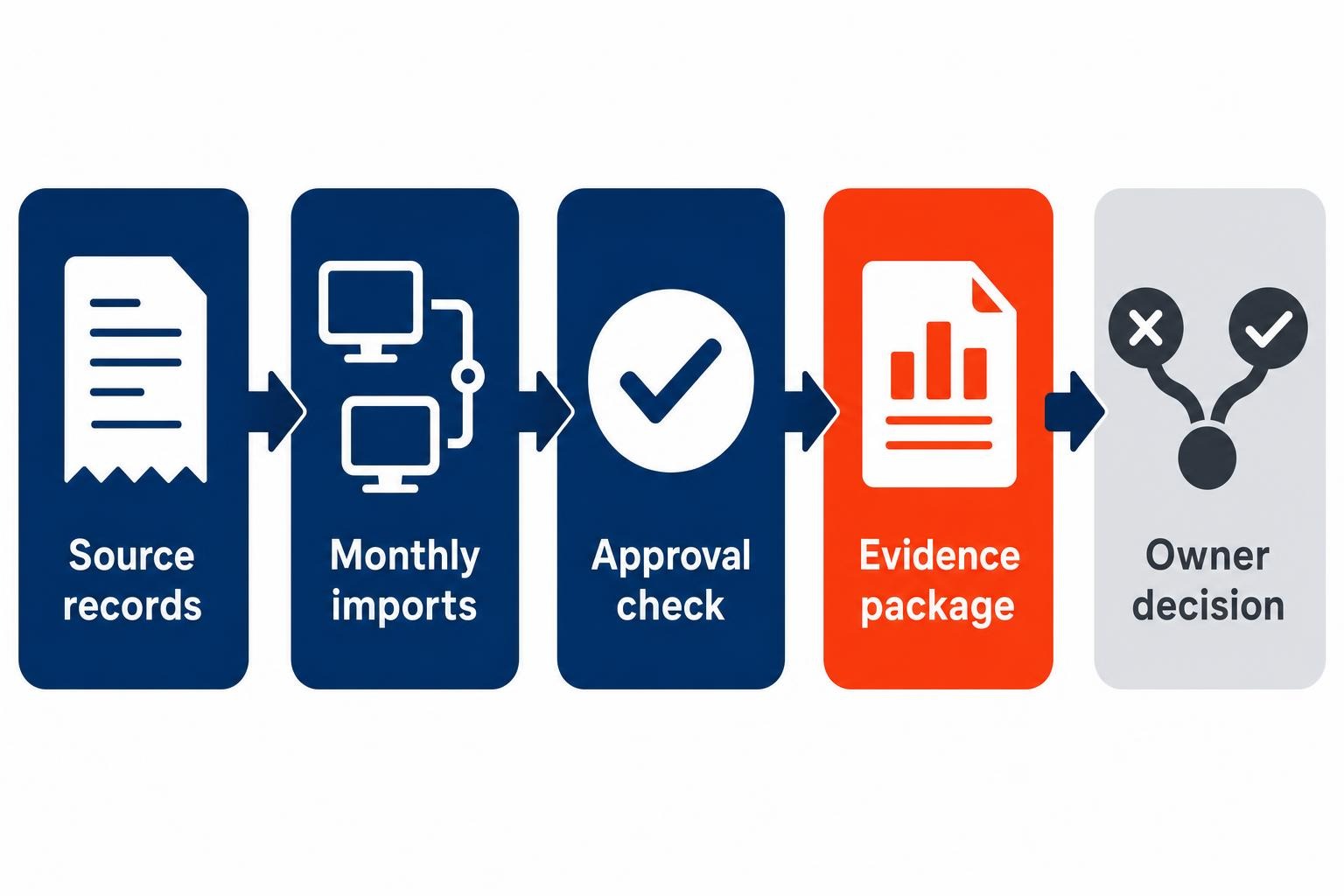
Use automation for collection and routing, not unattended judgment
- Set the source records. Name the reports and documents required each month, such as aged receivables, open jobs, approved change orders, bank activity and payroll summaries.
- Define the metrics. Write down what the firm means by job margin, overdue invoice, pipeline and cash position. A number with no shared definition creates avoidable arguments.
- Automate the handoffs. A practical Microsoft 365 setup can use SharePoint as the controlled document home, Excel for review, and Power Automate to request missing items and route a package through a defined approval sequence.
- Require an exception review. Let a workflow tool flag missing documents or late approvals, but require a named person to explain unusual movements and approve the final package.
- Store the decision record. Save the finished package and the owner’s notes together. Next month, the team can see which issue was identified, who owned it and whether it improved.
Take a hypothetical 12-person architectural practice with project managers who submit project status in different formats. The firm standardizes one monthly project update, stores supporting files in a controlled SharePoint location and uses an automation platform to alert the administrator when a manager has not completed the update. The owner then receives one review pack rather than chasing five people through email. The change is modest, but the result is material: margin discussions shift from recollections to records.
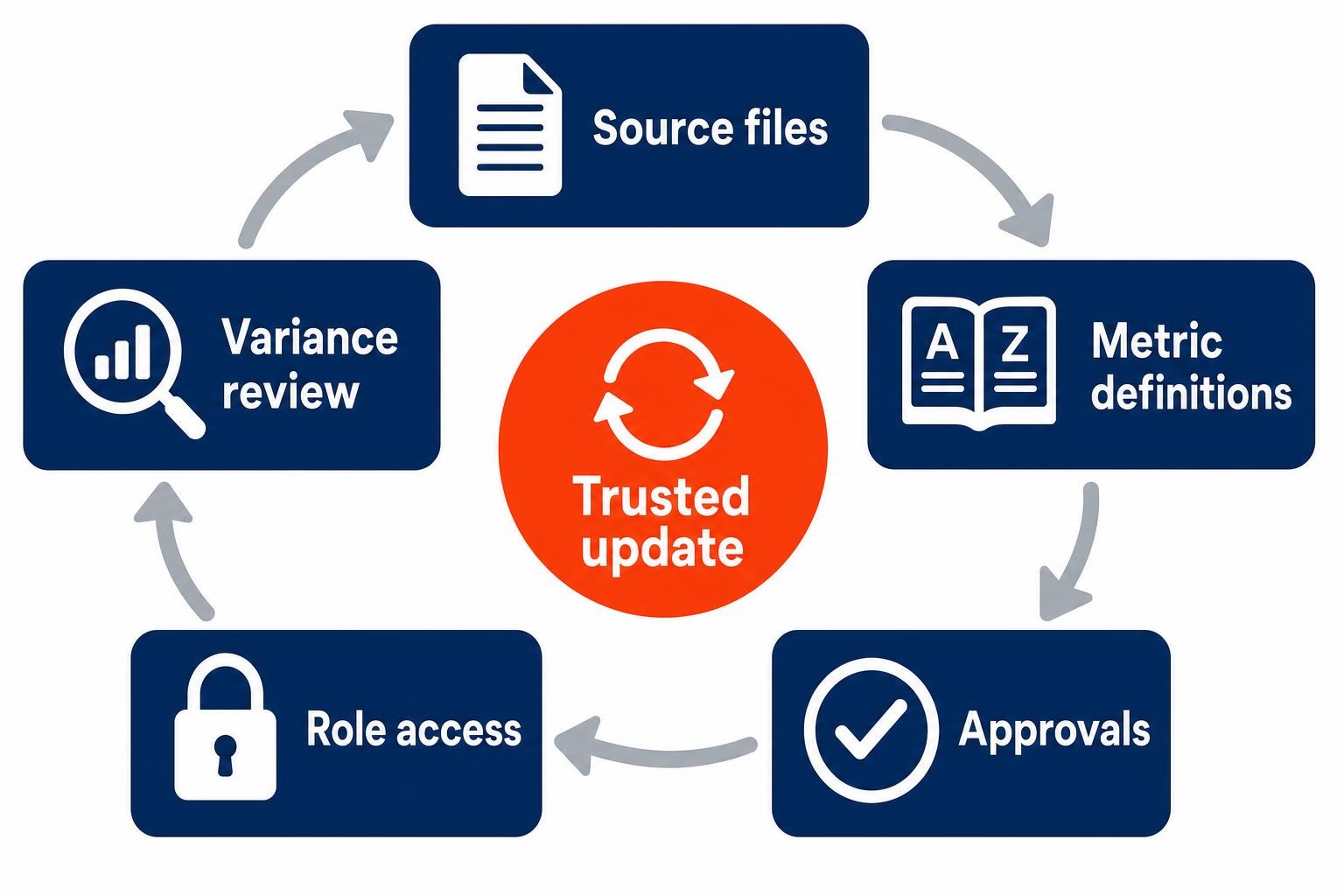
Governance belongs in the design from the first workflow. Limit access to financial folders by role, retain the underlying records and avoid feeding a broad shared drive into an AI assistant without clear boundaries. The warning in The Forgotten Network Share That is Turning Modern Law Firms into Hacker Goldmines applies well beyond law firms: unmanaged files become both a security issue and an evidence-quality issue.
Start with one painful reporting handoff. For the HVAC contractor, that might be the monthly link between completed jobs, invoices sent and cash collected. Run the revised process for a few cycles, fix the exceptions, then add the next handoff. A credible operating proof system is built through repeatability, not a dramatic technology purchase.
Frequently asked questions
What does Rillet’s $100 million funding round mean for small businesses?
It does not mean every small firm should replace its accounting software with AI. The practical lesson is that current, credible operating information creates options. When your records clearly connect revenue, costs, cash and exceptions, lenders, advisers and potential partners can assess the business with less uncertainty.
What should be in a monthly financial evidence package?
Include the financial reports your owner or accountant relies on, the source records needed to support them, a short list of exceptions and written commentary on meaningful changes. Keep metric definitions and approvals with the package so a reviewer can understand both the number and the process behind it.
Can AI prepare financial reports without accountant review?
AI can assist with document collection, reminders, first-draft summaries and identification of missing information. It should not replace review of reconciliations, accounting treatment, unusual transactions or final approvals. Keep a qualified person accountable for the conclusions and retain the documents that support each material figure.
Readiness beats speed
Rillet’s 48-hour unicorn round is a striking story, but speed was the outcome of confidence built before the announcement. Your 35-person HVAC contractor does not need a billion-dollar valuation to apply that lesson. It needs a dependable monthly view of job performance, receivables, cash and exceptions, with documents that support each conclusion. Begin with the reporting handoff that currently causes the most chasing and uncertainty. Automate its collection, keep approval and accounting judgment with people, and make the review package repeatable. When opportunity arrives, your firm will have evidence ready.
This article is general information for business owners, not legal, tax or financial advice. Rules vary by state and change often; confirm current requirements with a licensed professional before acting.
Ready to explore how you can streamline your processes? Reach out to Automated Intelligent Solutions today for expert guidance and tailored strategies.